Inspiring Woman in Real Estate, 2026
Digital Edition 2026

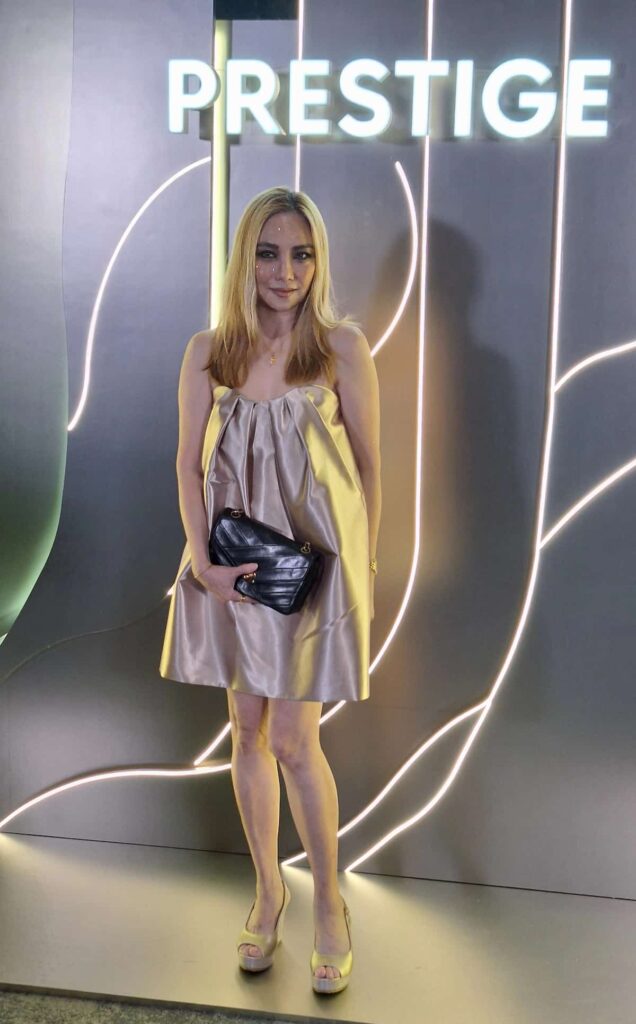
Sulian Tan-Wijaya is a real estate leader whose career has moved through banking, hospitality, tourism and property across Singapore and the wider region. Today, she serves as Executive Director at Savills Singapore, overseeing portfolios in Retail and Lifestyle and Private Wealth. Outside her main role, she serves as Senior Advisor to Shoucheng Holdings Limited and as an advisor to the Singapore-Hangzhou Business Association. Her path was never a straight line. It was shaped by school sports, a short spell in show business, a decade in Indonesia and a habit of saying yes when new doors opened. Behind it all sits one steady belief: there is always a solution to every problem.
CIO Global is pleased to spotlight Sulian Tan-Wijaya in this edition, celebrating a notable contribution to leadership, innovation, and industry progress.
At Savills, Sulian looks after two very different areas of work. In Retail, she brings exciting brands and concepts to Singapore. These cover shops, food and beverage, entertainment, wellness and services, and her task is to find each of them the right home. In Private Wealth, she works with accredited individual investors and institutional clients on real estate mandates across many countries. This department is new and focuses on off-market opportunities for ultra high net worth individuals and institutions. When her CEO asked if she would like to join it, she agreed without thinking too long. One of her current mandates is the sale of a rare freehold resort and villa land in Japan.
Defeat or failure was never an option.
Her work beyond Savills is just as interesting. Shoucheng Holdings is listed on the Hong Kong stock exchange and backed by a state-owned enterprise in Beijing. It invests in fast-rising Chinese companies in artificial intelligence, robotics and new energy, including well-known names such as Unitree and Deep Robotics. Sulian explains that Shoucheng is more than a passive investor. It helps bring China’s robotics businesses to market, with experience stores that show more than 200 robot models for home, education, companionship and medical rehabilitation. It also manages the US$1.4 billion Beijing Robot Industry Development Investment Fund and co-organises the annual World Humanoid Robot Games.
The advisory role came through years of friendships and business networks with leaders in China. Sulian admits that her spoken Chinese is not strong. Even so, she believes the trust she built with these businessmen is the reason they seek her advice when they plan to grow outside China. She recently agreed to advise the Singapore-Hangzhou Business Association as well. Many of China’s top technology, AI and robotics companies began in Hangzhou, so this role gives her a closer look at some of the most innovative firms in the region. For her, these roles are a way to stay close to the industries she believes will shape the future.
Her career began in a very different place. After earning a Bachelor of Law degree from the National University of Singapore, Sulian started work as a corporate banker in Indonesia and stayed for nearly ten years. She enjoyed banking so much that she expected to remain in it for life. When she returned to Singapore, a chance in hospitality came up, and that moment changed her direction for good. She then spent three and a half years at the Singapore Tourism Board, looking after the tourism shopping division. Later she was head-hunted by Sinoland, a Hong Kong listed real estate group that owned landmark hotels and retail developments along Marina Bay.
Her first real contact with property came through a group that owned a prime shopping mall and office building on Orchard Road, along with two office towers in the central business district. The group later bought a thirty percent stake in a prestigious high-end retail and office complex on Orchard Road. She then became General Manager of The Fullerton Heritage, an iconic precinct made up of two luxury hotels, One Fullerton and Customs House, facing Marina Bay Sands. It was there that Savills asked her to set up a new Retail real estate department. That was eighteen years ago, and it set her on a long path in retail property.
Sulian’s early years explain much of her drive. Both of her parents were busy, high-flying professionals, so she grew up with little supervision and a lot of freedom. She often got into trouble, but she also learned to solve problems on her own. In high school and junior college she saw herself as an awkward tomboy and found comfort in sport. She represented her schools in athletics, swimming and squash, and she won gold medals in team events at national school competitions. She says those years were defining, because competitive sport made her competitive later at work.

While studying law at one of the top universities in the world, Sulian was scouted to work as a model, a DJ and a television host. It was a sharp change from sport. She had to leave her tomboy image behind and learn to wear make-up and high heels. The work was glamorous and paid very well. More importantly, it showed her the real world at a young age, and she found it much harsher than university life. By the time she graduated and became a banker, she was no longer a naive fresh graduate. On the surface, moving from entertainment to banking was a huge step. Underneath, the same values mattered: discipline, professionalism, humility, teamwork and going the extra mile.
Embrace A.I and leverage on it rather than see it as a threat.
Indonesia shaped her more than any other place. She lived through the deadly riots and the Asian Financial Crisis, and she also faced several bomb threats. The Indonesian currency lost ninety percent of its value almost overnight. When it was time to leave the country, the people who got her safely out were members of the mafia, not the people she would have expected to depend on. The drive to the airport felt unreal, like a scene from a dystopian film, with buildings, toll stations and vehicles on fire. Yet her Indonesian clients still called her to go out and have fun, never losing their sense of humour.
Sulian does not call those years setbacks. She says they taught her how much easier life in Singapore is and how fortunate Singaporeans are. She was deeply inspired by the way Indonesians recovered from one crisis after another. In Indonesia, she says, nothing was impossible and nobody took no for an answer. She also learned a new language and culture while working there, and she counts surviving ten years in the country among her proudest achievements. The experience made her resilient, and it left her with a firm belief that defeat or failure is never an option.
These experiences made Sulian an unconventional leader. When she started working, the corporate world was ruled by the Baby Boomers, and structure and tradition came first. Her sport, her time in show business and her years in Indonesia had made it impossible for her to work in a fixed, conventional way. Her approach has always leaned toward creativity, resourcefulness and thinking out of the box. This style was not welcomed when she first came back to Singapore. It was only after she settled into the private sector, where these traits were valued, that her way of working began to be fully appreciated.
Her road was not easy. As a young career woman, she met a lot of prejudice. Some older male colleagues and clients saw her as just a pretty young thing, while some older female colleagues tried to put her down because they saw her as a threat. She had to work twice as hard to prove herself. Even after she succeeded, critics tried to dismiss her by calling her a socialite. Sulian points out that the label is actually a burden for a career, because it suggests that she does not need to work and is only having fun.

Nothing was impossible and there was always a solution to every problem.
The hardest period came after she returned to Singapore, when she faced bullying at work for several years. She suffered from panic attacks, and her immune system also reacted badly, so she was in and out of hospital. During those dark years she turned back to her faith and slowly found the strength to fight back. Today she says she is in a good place and is grateful to God. The experience shows a side of her story that is rarely seen from the outside: a person who was pushed to her limit and chose to keep going.
At Savills, Sulian works in a company that is truly international. Her colleagues come from all parts of the world, and the retail business is built around the Asia Pacific and European teams. In recent times she has also worked closely with colleagues in the Middle East. She believes this culture makes the team resilient and relaxed with clients from different countries. Whether she is working with another department in Singapore or on a cross-border deal with a team in another city, everyone relates well to each other. In her view, an open mind and a willingness to adapt to other cultures are the most important needs for working across borders.
Sulian knows that both of her fields are changing quickly. Retail is one of the most dynamic industries. The threat from e-commerce came and went long ago, and consumer tastes and spending habits now shift faster than ever. As a real estate consultant, she must keep up with every trend or lose credibility. Private Wealth is a newer area that grew out of a large amount of newly created wealth. Accredited and institutional investors are very sophisticated, and at times they know more than their advisors. For that reason, she says, the only way to add value is to offer them something they have not yet explored.
Her growth strategy is built on accepting change. With technology and AI changing business so fast, Sulian chooses to embrace new trends instead of resisting them. She believes real estate is evolving, so she keeps looking for new overseas markets rather than competing only in the crowded Singapore market. Through Shoucheng and the Singapore-Hangzhou Business Association, she stays close to technology, AI, robotics and new energy. As an advisor, she looks for investors and partners who can help the group grow and scale beyond China. She believes staying ahead is mostly about mindset, and about how willing a person is to learn new skills and evolve.
When Sulian looks back, she names a few milestones with pride. These include the gold medals she won for her school, her work as a model, DJ and television host while studying law, and her ten years as a banker in Indonesia. She is also thankful that she still holds a strong job, has been given a second portfolio and now has an advisory role with an established Chinese company listed in Hong Kong. At home, she is proud of her children. Her daughter is a very successful oncologist, and her son manages investments at a prominent Hong Kong conglomerate.
Looking ahead, Sulian expects retail to keep changing quickly. She feels fortunate to work with a close team of retail colleagues around the world who act as one team and bring new brands across borders. She sees Private Wealth as an exciting area of growth, where accredited investors, family offices and institutions will keep exploring new markets and new asset classes. She also expects Shoucheng to stay at the front of China’s AI and robotics industries, and she is excited to introduce overseas strategic partners who can help it grow globally.
Instead of resisting change, I am fully embracing change and new trends in business.
For young professionals, her advice is honest and direct. A university degree is only the beginning of a challenging career or business. Be ready for tough competition, setbacks, failure and rejection, and expect a lot of it. Embrace AI and use it as a tool rather than seeing it as a threat. Sulian admits that all of this is easier said than done. But she believes resilience, a hunger for knowledge and creative thinking are what carry a person beyond school and prepare them for the future, just as they carried her through every chapter of her own journey.