Lisa Lang – Leading with Trust and Transforming Legal Education
Digital Edition 2026
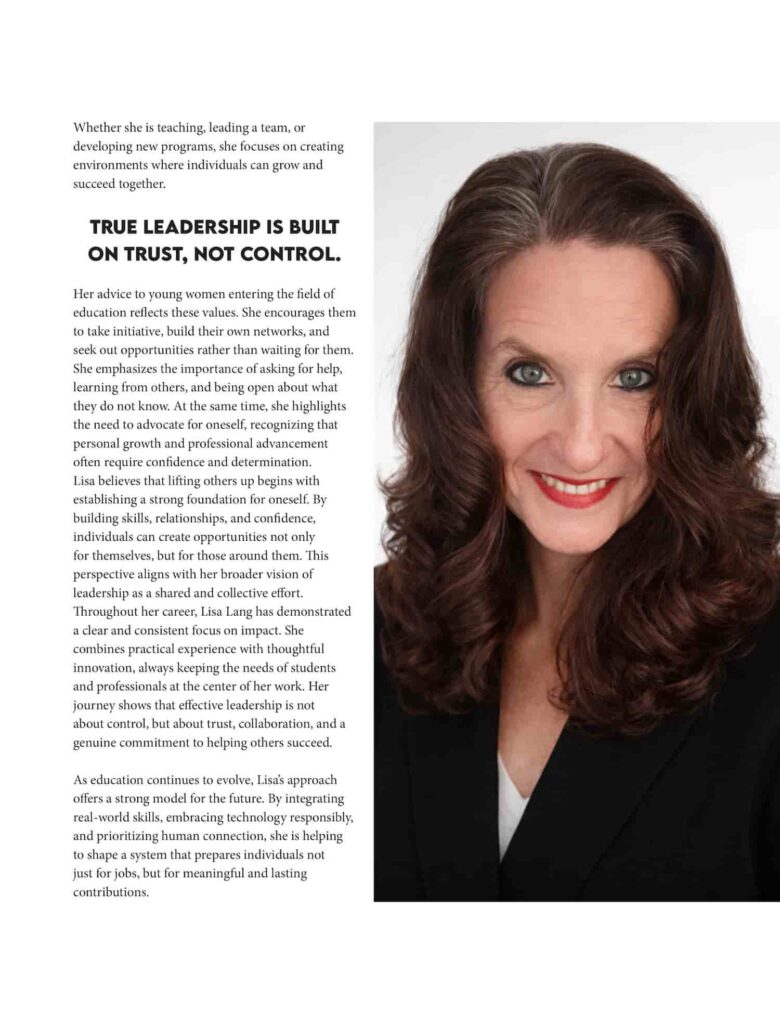
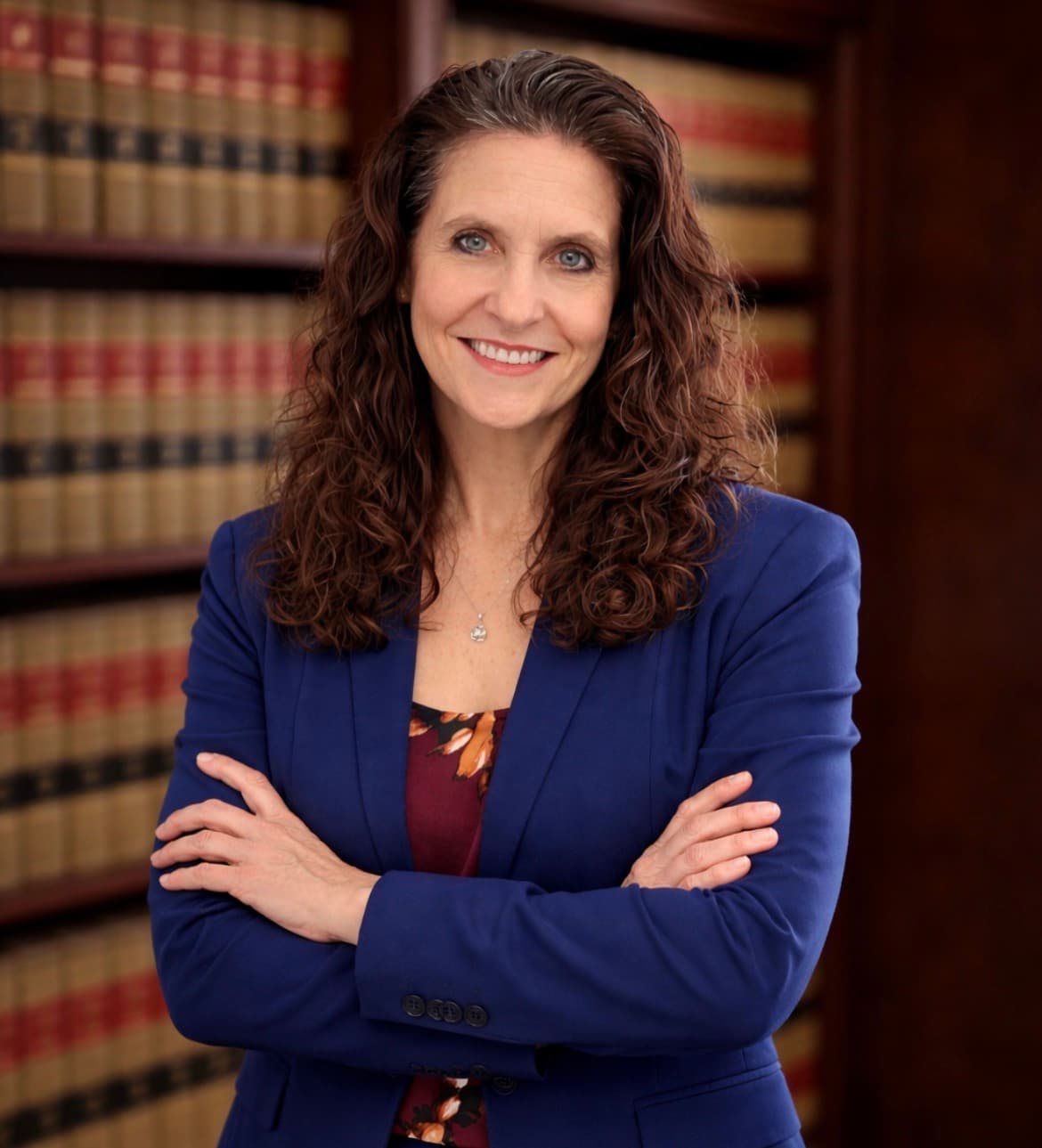
Lisa Lang’s professional journey reflects a strong commitment to leadership, education, and practical impact. Her work sits at the intersection of law, teaching, and innovation, where she focuses on preparing students not just to understand theory, but to succeed in real-world environments. Over the years, she has built a career that combines discipline, adaptability, and a deep understanding of people. Her approach is not only shaped by her legal expertise, but also by her early experiences in the military, which laid the foundation for her leadership philosophy. We at CIO Global are proud to name Lisa Lang as the Visionary Woman Shaping the Future of Education, 2026
Lisa began her career serving as a military paralegal with the Judge Advocate General’s Corps from 1992 to 1998. During this time, she was deployed to Bosnia-Herzegovina, where she worked in high-pressure conditions and took on responsibilities that required both independence and collaboration. At a relatively young age, she acted as a liaison between legal officers and command leadership, identifying legal issues, gathering information, and ensuring that decisions were informed and effective. This experience taught her how to stay calm under pressure, how to think critically, and how to take responsibility for outcomes. It also helped her develop resilience, empathy, and a strong sense of accountability.

Technology should support learning, not replace human judgment.
These early lessons became the backbone of her leadership style. Lisa describes her approach as collaborative, built on trust, shared decision-making, and collective accountability. She believes in empowering people rather than controlling them, and she values open communication at every level. Her leadership is not about hierarchy, but about creating an environment where everyone feels heard and respected. She understands that the best ideas do not always come from the most senior person in the room, and she actively encourages participation from all members of a team.
As her career progressed, Lisa transitioned into higher education, where she took on roles that allowed her to combine her legal expertise with her passion for teaching and mentorship. One of the most defining moments in her career came during the COVID-19 pandemic. At the time, she was serving as General Counsel at a public regional university. The sudden shift from in-person operations to fully remote systems created a wave of legal and operational challenges. Questions around virtual governance, contract execution, student obligations, and employment policies emerged rapidly, often without clear answers.
While these challenges required strong legal knowledge, Lisa realized that the real test was not technical, but human. People were dealing with fear, uncertainty, and personal struggles. Faculty had to adapt to online teaching, staff had to manage work and family responsibilities, and students faced isolation and disruption. Lisa understood that her role extended beyond ensuring legal compliance. She needed to support people, provide clarity, and create a sense of stability in uncertain times.
She responded by focusing on communication and empathy. She made it a priority to share information transparently, even when all the answers were not available. She encouraged her team to stay connected, to check in with one another, and to approach challenges with patience and understanding. This experience reinforced her belief that strong leadership is rooted in human connection. It showed her that while systems and processes are important, it is the people within an organization who ultimately determine its resilience.
Another important aspect of Lisa’s work is her focus on bridging the gap between academic learning and practical application. She recognized that many law students graduate with a strong understanding of legal theory, but limited exposure to the skills they need in real-world practice. This gap can make the transition into professional roles challenging, especially in fast-paced environments where new lawyers are expected to contribute immediately.
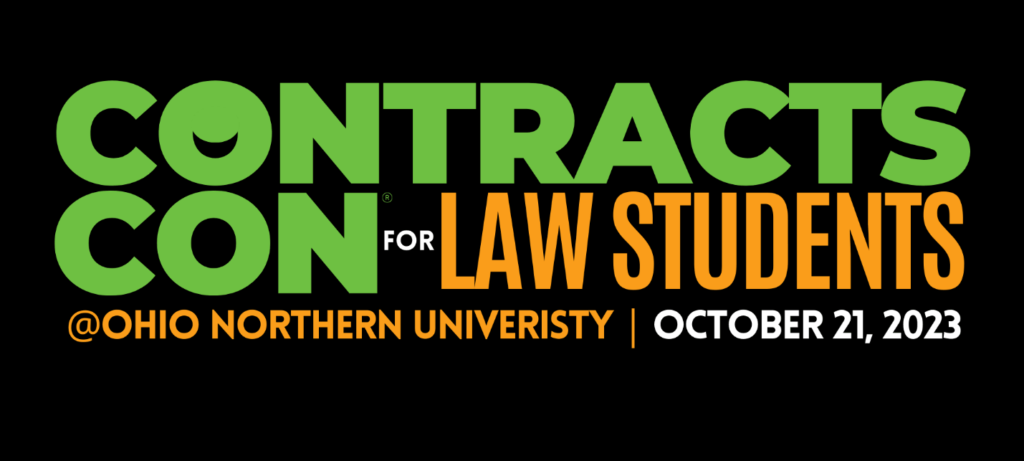
This commitment is clearly reflected in her work with ContractsCon Law School Edition. She played a key role in bringing this initiative to Ohio Northern University’s Pettit College of Law, where she hosted the 2023 edition of the program. The event was designed as an intensive, hands-on workshop that introduced law students to the practical side of contracting, an area often underrepresented in traditional legal education. Her work and approach through this initiative were also featured on the EdUp Legal podcast, highlighting the growing importance of practical skills in preparing future lawyers. Through this program, students moved beyond theoretical concepts such as offer, acceptance, and consideration, and learned how to read contracts, identify risks, and negotiate terms effectively. Lisa collaborated with experienced practitioners to create a model that is both accessible and scalable, allowing institutions with limited resources to still offer meaningful experiential learning. The response from students was highly positive, with many describing it as one of the most practical and valuable experiences in their legal education, reinforcing her belief that future-ready learning must be grounded in real-world application.
Future-ready education begins with real-world skills.
To address this issue, Lisa played a key role in bringing ContractsCon Law School Edition to Ohio Northern University’s Pettit College of Law. This initiative was designed as an intensive, hands-on workshop that teaches students how to work with contracts in practical settings. Instead of focusing only on legal concepts like offer, acceptance, and consideration, the program helps students learn how to read contracts, identify risks, and negotiate terms effectively.
The idea behind this initiative was simple but powerful. Many law schools do not have the resources to build large transactional programs or clinics, but they can still offer meaningful practical experiences through focused workshops. By partnering with experienced practitioners, Lisa helped create a model that is both scalable and accessible. The feedback from students was overwhelmingly positive, with many describing it as one of the most useful learning experiences in their legal education.
Lisa’s approach to innovation extends beyond program design. She is also deeply interested in how technology can enhance teaching and learning. In recent years, many institutions have focused on teaching students how to use artificial intelligence in legal practice. While Lisa recognizes the importance of this, she takes a different perspective. She asks how AI can help her become a better educator.
In her teaching, she uses AI as a support tool that allows her to focus on what matters most. It helps with managing time-and preparing materials. This not only improves learning outcomes, but also ensures that students receive the guidance they need when it matters most.
At the same time, Lisa emphasizes that technology should not replace human judgment. She carefully reviews and verifies all AI-generated content, ensuring accuracy and relevance. She sees AI as a tool that amplifies expertise, not one that substitutes it. This balanced approach reflects her broader philosophy of integrating innovation with responsibility.
For Lisa, the concept of future-ready education is central to everything she does. She believes that students should graduate not only with knowledge, but with the ability to apply that knowledge effectively from day one. This means developing practical skills, building confidence, and learning how to adapt to change. In the legal field, this includes understanding how to analyze contracts, communicate clearly with non-legal stakeholders, and navigate complex situations with confidence.
She also believes that education should go beyond teaching students to identify problems. While issue-spotting is an important skill, it is only part of the equation. The most effective professionals are those who can also find solutions, make decisions, and help organizations move forward. Lisa works to instill this mindset in her students, encouraging them to think critically and act proactively.
Another key theme in Lisa’s career is the importance of community. She believes that professional growth is not achieved in isolation, but through meaningful connections with others. During the pandemic, she co-authored a book with a group of lawyers who built a network through virtual collaboration. This experience reinforced her belief that strong networks are essential for learning, support, and opportunity.
Lisa sees community as a powerful force in education as well. Leaders who prioritize mentorship, collaboration, and inclusion can create environments where students and professionals thrive. She recognizes that many individuals, especially women, have had to build these networks intentionally, often without being included in traditional decision-making spaces. This has given them a unique perspective on the importance of creating opportunities for others.
Through her work, Lisa strives to build spaces where people feel valued, supported, and empowered. Whether she is teaching, leading a team, or developing new programs, she focuses on creating environments where individuals can grow and succeed together.
True leadership is built on trust, not control.
Her advice to young women entering the field of education reflects these values. She encourages them to take initiative, build their own networks, and seek out opportunities rather than waiting for them. She emphasizes the importance of asking for help, learning from others, and being open about what they do not know. At the same time, she highlights the need to advocate for oneself, recognizing that personal growth and professional advancement often require confidence and determination.
Lisa believes that lifting others up begins with establishing a strong foundation for oneself. By building skills, relationships, and confidence, individuals can create opportunities not only for themselves, but for those around them. This perspective aligns with her broader vision of leadership as a shared and collective effort.
Throughout her career, Lisa Lang has demonstrated a clear and consistent focus on impact. She combines practical experience with thoughtful innovation, always keeping the needs of students and professionals at the center of her work. Her journey shows that effective leadership is not about control, but about trust, collaboration, and a genuine commitment to helping others succeed.
As education continues to evolve, Lisa’s approach offers a strong model for the future. By integrating real-world skills, embracing technology responsibly, and prioritizing human connection, she is helping to shape a system that prepares individuals not just for jobs, but for meaningful and lasting contributions.