
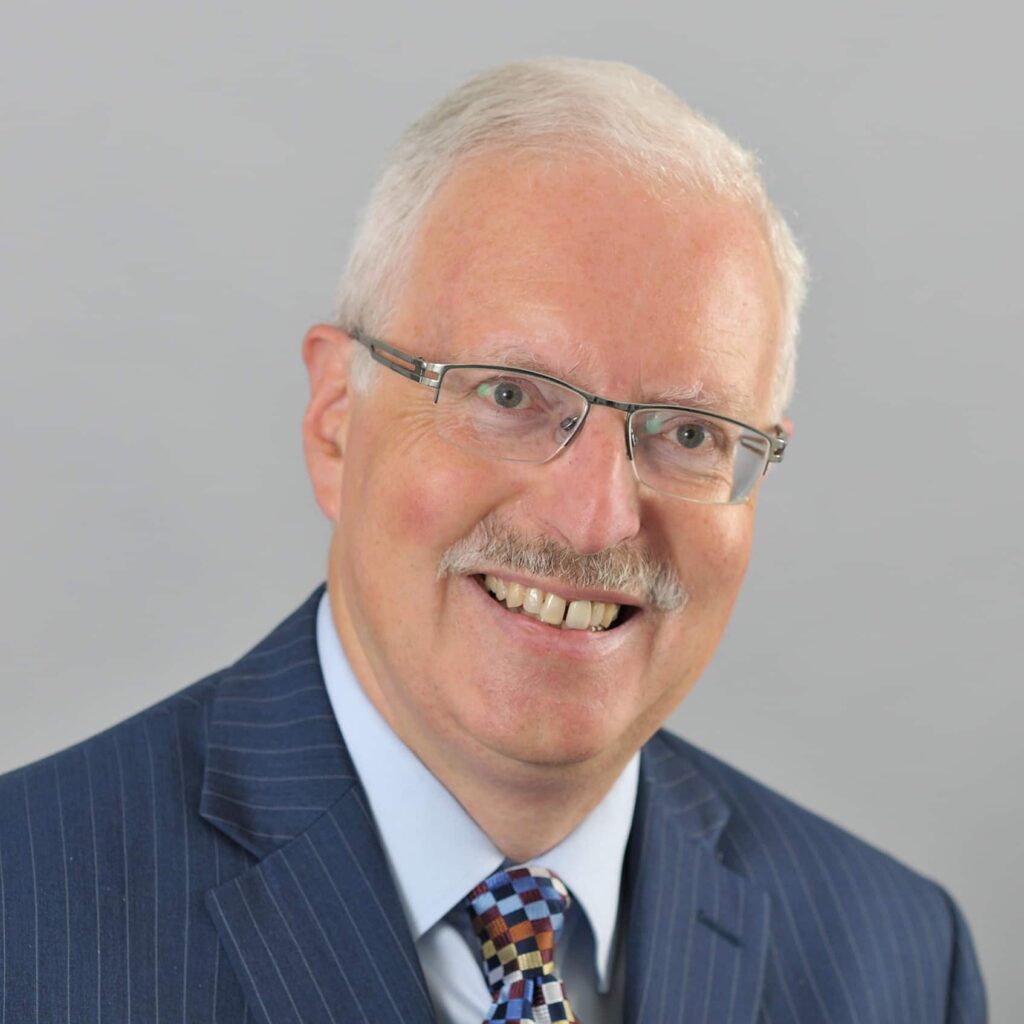
Professor Graham Weale has built a remarkable career in the energy industry over nearly five decades. His journey reflects a rare mix of scientific knowledge, economic thinking, international experience, and a deep interest in helping society manage energy change in a practical way. He began his career with ExxonMobil and later worked as a European energy consultant before becoming Chief Economist at RWE AG, Germany’s largest power generator.
During his consulting career, he also established himself as a respected Expert Witness in high-profile international energy price arbitrations, a role he continues to undertake today, including providing evidence before a Tribunal in New York in a recent energy pricing dispute. While serving at RWE AG, he was the leading witness before the French Senate in 2014 during a hearing on the consequences of Germany’s Energiewende (Energy Transition), further highlighting his influence on international energy policy discussions. Since 2015, he has served as Professor for Energy Economics and Policy at Ruhr University Bochum, where he teaches master’s students and conducts research on hydrogen, power markets, carbon pricing, and energy transitions.
Beyond academia, he is a sought-after international guest speaker who regularly addresses audiences on the challenges and opportunities of energy transitions in Germany and around the world, sharing insights gained from decades of experience across industry, consulting, research, and policy. His work has always stood at the meeting point of technology and economics, allowing him to identify opportunities that others often missed. We at CIO Global are proud to introduce Professor Graham Weale as one of the 10 Distinguished Leaders Making an Impact in Europe, 2026.
Graham’s interest in energy grew from his early education and experiences. After completing his physics degree, he first planned to build a career as a physicist in industry. However, a vacation assignment in Nepal and a course in International Affairs changed his direction. These experiences gave him a desire to work in a field with a wider international dimension. Energy became the right path because it connected science, economics, policy, and global development. This combination shaped the foundation of his career and gave him the chance to contribute to one of the world’s most important sectors.
A clear strategy helps teams move with purpose.
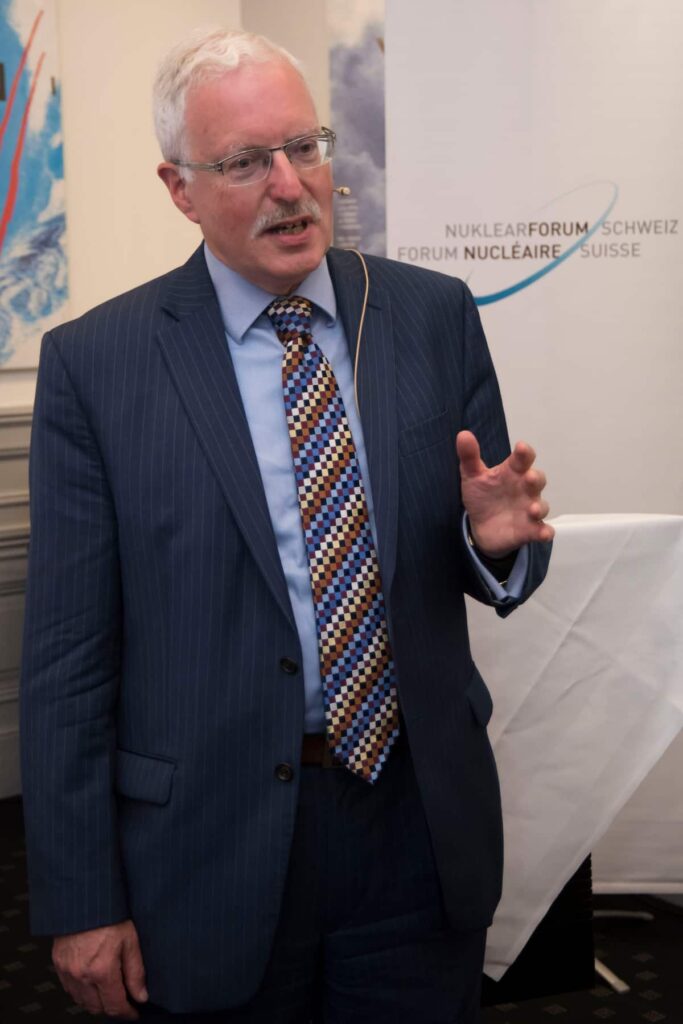
For Graham, distinguished leadership means making meaningful contributions that support the development of a country or society. He believes such leadership comes from special education, creativity, and the ability to explain valuable opportunities before others recognize them. This belief has guided many parts of his professional life. One of his biggest achievements came in the late 1980s, when he drew Europe’s attention to the important role that modern gas plants, especially combined cycle gas turbines, could play in the European power system. His work led to a front-page article in the Financial Times and many presentations at international conferences. By 2010, these plants were generating around 20 percent of Europe’s power, showing the long-term impact of his early insight.
Innovation has been a constant part of Graham’s career. During his time at ExxonMobil’s Fawley Refinery in the late 1970s, he developed the concept of a multi-time linear program to optimize daily product production. This idea increased refining profits by about 20 million dollars per year. Later, as a consultant, he helped shape thinking around gas turbine combined cycle plants, gas storage, oil refining, and energy market development. His work was often based on understanding both the technical and commercial sides of energy. This made his ideas practical, timely, and valuable for companies, governments, and the wider industry.
His career also includes important leadership roles. As Director of European Energy Consulting at Global Insight, now part of Standard and Poor’s, he worked across all forms of energy and all European countries. Later, as Chief Economist at RWE AG, he established a market planning system used across the company to evaluate investment decisions and forecast revenue. He also helped the company navigate the 2009 financial crisis and the early stages of Germany’s Energiewende, which brought rapid growth in renewable power. These roles required not only technical expertise but also clear judgment, strong communication, and the ability to guide teams through uncertainty.
Throughout his consulting career, Graham was also engaged as an Expert Witness in several high-profile international energy price arbitrations. His expertise in energy economics and market analysis made him a trusted voice in complex disputes. Most recently, he provided evidence before a Tribunal in New York as part of an international energy pricing case, further demonstrating the continued relevance of his knowledge and experience.
Since joining Ruhr University Bochum, Graham has continued to make an impact through education and research. He teaches students about modern energy economics and encourages them to think deeply about real energy policy problems. His leadership style is based on inspiration, freedom, and professional development. He believes strong teams are built through clear roles, careful recruitment, and trust. He also places importance on helping team members gain recognition and grow in their careers. In the classroom, he challenges students with questions and encourages them to think about how they would solve complex energy issues.
Innovation matters most when it creates practical change.
Graham has also faced the challenge of bringing research ideas to government-level attention. To overcome this, he published articles in the business press, including nearly twenty articles in German publications since 2020. Some of these articles led to discussions with government representatives. His research has focused on making energy transitions more efficient and less costly. He has also worked as a Senior Advisor to the Energy Transitions Commission, as a consultant to PWC on power market design, and as a member of the IEA Business Council. These roles show his continued influence beyond academia.
Beyond his academic and advisory responsibilities, Graham is also a sought-after guest speaker at international events. He regularly addresses audiences on the challenges and opportunities of energy transitions in Germany and other countries, sharing practical insights drawn from decades of experience in industry, consulting, and research.
Looking ahead, Graham sees rapid technological progress as a major force shaping the energy industry. He believes renewable energy will become increasingly competitive against fossil fuels, not only because of climate goals but also because of economics. He also sees artificial intelligence playing a major role in improving the production, transmission, and use of energy. Another important part of his vision is hydrogen. He has explained how clean ammonia could become a key way to transport hydrogen across the world, possibly replacing much of today’s fossil fuel trade. He has also proposed a midstreamer model to support hydrogen development in Europe, creating stronger links between producers and consumers.
Outside his professional life, Graham maintains balance through family, faith, and music. He has been happily married for 48 years, is actively involved in his local church, and plays violin in the Rhein-Ruhr-Philharmonie Orchestra. His voluntary work also reflects his values. In 2015, he supported refugees in Germany by visiting a local café where they could seek help and friendship. In 2019, he helped form a German-speaking Living Room Church to support people who were lonely or facing difficulties. These efforts show that his leadership is not limited to energy or academia. It is also rooted in service, compassion, and community.
Graham’s advice to young professionals is clear and practical. He encourages them to work hard in their studies, ideally across more than one discipline. He also believes leaders need a clear strategy that team members can understand and support. For him, leadership requires encouragement, high standards, and the courage to make difficult decisions when needed. Through his long career, Graham Weale has shown how knowledge, creativity, and persistence can create lasting impact. His work continues to guide Europe’s energy future and inspire the next generation of energy leaders.
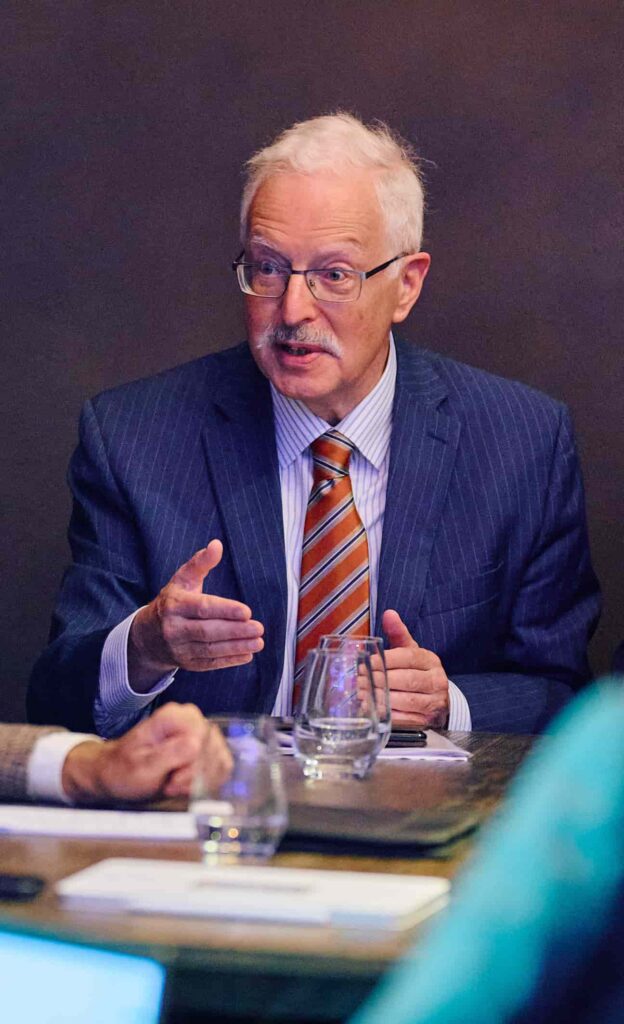
Energy leadership begins where technology and economics meet.