
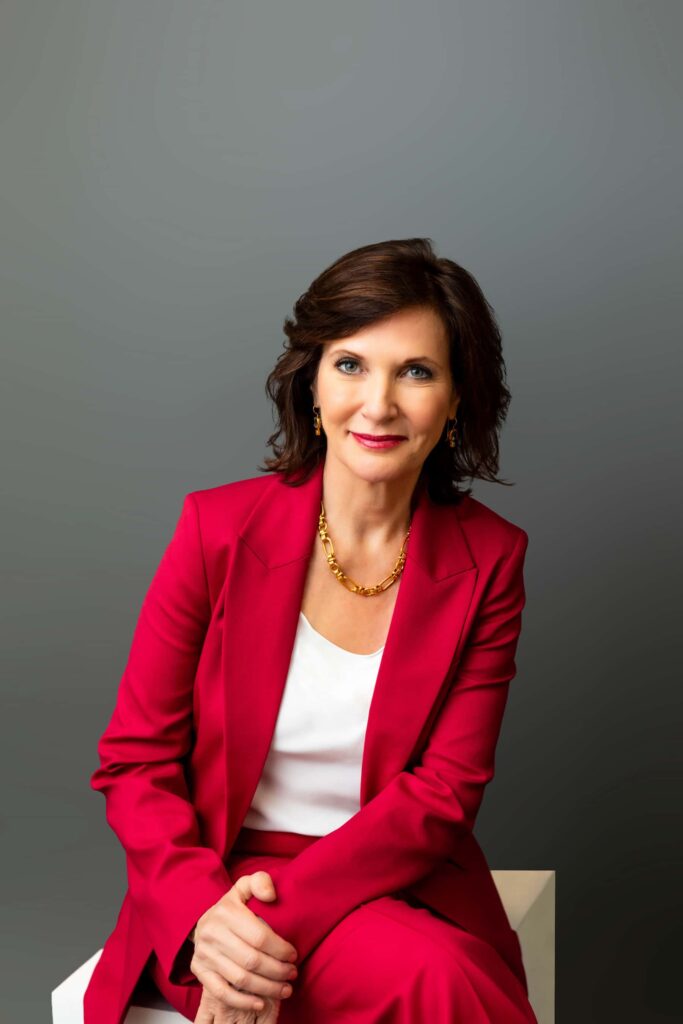
Dr. Margie Warrell
Leadership Consultant & Executive Coach
Margie Warrell Global LLC
Dr. Margie Warrell did not originally plan to become a coach. Her path into coaching began during one of the most difficult periods of her life. At 28, while working in corporate marketing in Papua New Guinea and eighteen weeks pregnant, she experienced a terrifying robbery during which she had a sawn-off shotgun pressed into her forehead. Ten days later, she learned that the baby she was carrying had died.
While the experience rocked her world, it ultimately expanded it, becoming a catalyst for deep personal growth. “I came to realize that while we cannot always choose the circumstances we find ourselves in, we always get to choose our response,” Dr. Margie Warrell said.
The experience accelerated her decision to change career direction, returning to study psychology and eventually going on to earn a masters in leadership and PhD in human development, and building a whole new career in coaching and helping people make braver decisions.
CIO Global proudly features Dr. Margie Warrell in this edition, celebrating their achievements, leadership, and valuable impact.
Today, her coaching philosophy is grounded in a simple but challenging idea: growth and comfort cannot exist together. She combines behavioral science with practical experience from working with leaders making high-stakes decisions and facing important crossroads. For her, knowledge alone is rarely enough. People may understand what they need to do, yet still struggle to take action. Her role is to help them look honestly at the fears, beliefs, and habits that keep them from moving forward. Rather than focusing only on the polished version of a person, she meets clients where their fear is strongest and helps them close the gap between what they know they should do and what they actually do.
The ‘timidity tax’ we pay for avoiding hard conversations always exceeds the discomfort of having them.
A major challenge she sees across both professional and personal settings is fear disguised as something else. It can appear as indecision, controlling, perfectionism, over-analysis, avoiding difficult conversations, or remaining in a role long after it has stopped being fulfilling. The rapid development of artificial intelligence has added another layer to these concerns. Many people are not simply worried about an uncertain future; they are afraid of losing the familiar security they have built. Dr. Warrell helps people shift their attention away from circumstances they cannot control and toward the qualities they can strengthen within themselves.
Understanding each client requires more than listening to the problem they bring into a coaching session. Margie pays attention to the stories people tell themselves, the language they use, and even the way they physically carry themselves. Posture, breathing, and tension can reveal feelings that a person may not express directly. Instead of immediately offering solutions, she asks thoughtful questions that encourage clients to discover their own answers. She believes the right question can often create more lasting change than advice.
One coaching experience that remains memorable for her involved a senior leader who had avoided having a difficult conversation with an underperforming team member for more than a year. The leader jokingly described himself as a wimp, but Margie helped him connect to the deeper fear that was stopping him from being the leader he wanted to be and reset his own relationship to his vulnerability. Once he decided to sit with his discomfort, he was able to brave the conversation he had been avoiding. Within months, both team engagement and his credibility with high-performing employees improved. The experience reinforced one of her central lessons: the greatest source of business risk often stems from the conversations we are not having.
Her coaching approach follows a five-step framework outlined in her book The Courage Gap. It’s built around intention, belief, embodiment, action, and learning. She encourages people to examine the stories they tell themselves, understand how fear affects their thinking and behavior, and then take one honest and imperfect step forward. Rather than waiting for confidence to appear, she believes confidence is developed through action. People do not need to feel completely ready before doing something courageous.
Courage is a decision, not a feeling. Deciding to take action, despite doubt and uncertainty, is never as costly as waiting for confidence or certainty.
When clients feel discouraged, Margie does not treat discouragement as proof that they are failing. Instead, she encourages them to become curious about what the feeling may be showing them. Difficult emotions can sometimes signal that a person is pursuing something meaningful. Her approach is not about eliminating fear or discomfort but learning how to respond to them constructively.
Artificial intelligence has also changed the conversations she has with leaders. While the fundamentals of coaching remain centered on presence, purpose, integrity, and self-awareness, many clients now carry a new concern: whether they will remain relevant as technology changes their industries. Dr. Warrell helps them grow capacity to make decision amid the unknowns and focus energy on what lays within their control – adaptability, building trust, curiosity, and openness to learning.
Her own career has taught her that coaches are not immune to fear. She still experiences the temptation to avoid uncomfortable conversations and only stick with what holds little risk of failure. The difference is that she has cultivated a relationship with her fear that enables her not to let it guide her decisions. For Margie , courage is not a one-time achievement but an ongoing practice.
Looking ahead, Margie wants to continue helping people close the gap between the life they are living and the life they are capable of living. She also hopes to help leaders build organizations that make a positive contribution to the wider world. Her message to aspiring coaches and anyone seeking personal growth is clear: the situations that test people most can also teach them the most. Instead of waiting until everything feels comfortable or certain, people can begin with one brave step. In her view, readiness is not something people need to find before taking action. It is something they develop by moving forward.
Courage is not the absence of fear; it is choosing to move forward while fear is present.