
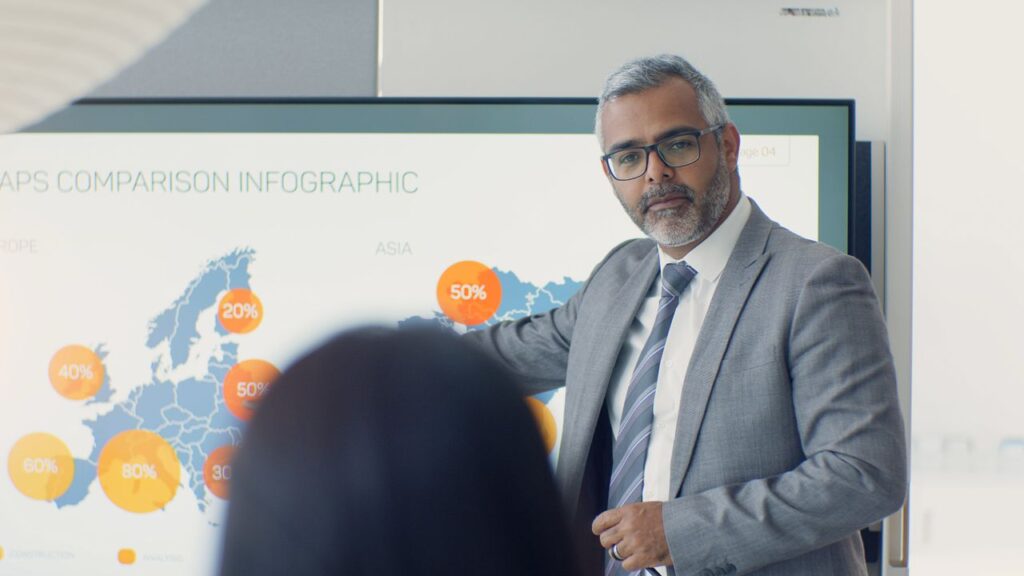
Leadership in 2026 is being shaped by rapid technological change, shifting customer expectations, economic uncertainty, and a workforce that values purpose as much as performance. In this environment, being a CEO is no longer only about setting business targets or making high-level decisions. Exceptional CEOs are expected to create clarity in complexity, build adaptable organizations, develop strong leadership teams, and turn emerging opportunities into sustainable business value.
The most effective CEOs understand that exceptional leadership is not defined by a single quality. It comes from combining strategic thinking, human understanding, technological awareness, financial discipline, and the ability to act decisively when circumstances change. Their leadership strategies are increasingly focused on building organizations that can perform today while preparing for what comes next.
One of the most important strategies defining exceptional CEOs in 2026 is the ability to lead through change. Businesses are operating in an environment where market conditions, technologies, regulations, and customer behaviors can change quickly. CEOs can no longer depend entirely on long-term plans that remain unchanged for years. Instead, they are creating organizations that can adjust without losing sight of their core purpose.
This requires leaders to communicate change clearly and consistently. Employees need to understand not only what is changing but also why the change matters. Exceptional CEOs connect transformation with a broader business purpose, helping teams understand how their individual contributions support the organization’s direction.
Technology leadership has also become a central responsibility of the modern CEO. Artificial intelligence, automation, advanced analytics, cloud platforms, and digital tools are changing how companies operate. However, exceptional CEOs recognize that technology itself does not create transformation. The value comes from knowing where technology can solve meaningful business problems.
Rather than adopting every new technology simply because it is available, forward-thinking CEOs focus on practical applications. They ask how AI can improve decision-making, how automation can remove repetitive work, how data can strengthen customer understanding, and how digital systems can improve efficiency. At the same time, they recognize the importance of responsible technology adoption, including data security, governance, transparency, and employee readiness.
Another defining strategy is developing strong leadership teams. Exceptional CEOs understand that sustainable growth cannot depend on one individual. Their role increasingly involves identifying capable leaders, giving them responsibility, and creating an environment where informed decisions can be made throughout the organization.
This means moving away from excessive centralization. CEOs who empower executives and managers can create organizations that respond faster to opportunities and challenges. Delegation, when supported by accountability, allows senior leaders to concentrate on strategy while teams closer to customers and operations can respond to real-time developments.
Exceptional CEOs are also placing greater emphasis on organizational culture. Culture is no longer viewed simply as an internal human resources initiative. It directly influences employee engagement, innovation, collaboration, customer experience, and ultimately business performance.
Strong CEOs recognize that culture is shaped through everyday leadership behavior. How leaders respond to mistakes, recognize contributions, communicate difficult decisions, and treat employees during periods of uncertainty all influence organizational culture. In 2026, CEOs are increasingly expected to create workplaces where people can perform at a high level while also feeling trusted, respected, and connected to a meaningful purpose.
Customer-centric leadership is another important strategy. Markets are becoming increasingly competitive, and customers have more choices than ever. Exceptional CEOs therefore remain close to changing customer expectations instead of relying only on internal assumptions.
This requires combining customer feedback with data, market intelligence, and direct observation. CEOs need to understand what customers value, what frustrates them, and what emerging needs could create new opportunities. Organizations that consistently listen to customers can adapt their products, services, and experiences before competitors force them to change.
Financial discipline remains equally important. Innovation and growth require investment, but exceptional CEOs understand that sustainable growth depends on making disciplined choices about where resources are allocated. They balance short-term financial performance with long-term strategic investment.
This includes evaluating new opportunities carefully, managing costs without weakening the organization’s core capabilities, and maintaining sufficient resilience to handle unexpected challenges. The strongest CEOs understand that financial discipline is not simply about reducing expenses. It is about directing capital, talent, and time toward initiatives that create meaningful value.
Another strategy defining exceptional CEOs is building organizational resilience. Recent years have demonstrated how quickly external disruptions can affect businesses. Supply chain challenges, geopolitical developments, economic shifts, cybersecurity threats, and technological disruption can create risks that were previously difficult to anticipate.
Resilient CEOs therefore encourage scenario planning and risk awareness. They build flexible systems, diversify critical dependencies, strengthen cybersecurity, and prepare teams to respond when assumptions change. Resilience does not mean predicting every possible crisis. It means creating an organization capable of responding effectively when the unexpected happens.
Exceptional CEOs are also redefining the meaning of innovation. Innovation is not limited to launching new products or adopting advanced technologies. It can involve redesigning processes, entering new markets, improving customer experiences, changing business models, or finding better ways to use existing resources.
The CEO’s responsibility is to create conditions where useful ideas can emerge and be tested. This involves allowing teams to experiment while maintaining clear boundaries around risk and investment. Organizations that treat innovation as an ongoing capability rather than an occasional project are better positioned to adapt as markets evolve.
Finally, exceptional CEOs in 2026 are becoming more intentional about personal leadership. Technical knowledge and business experience remain important, but leadership also requires self-awareness, curiosity, adaptability, and the ability to listen.
The modern CEO must be willing to learn from employees, customers, partners, and even competitors. They must recognize when an established approach is no longer effective and have the confidence to change direction. At the same time, they need the discipline to remain consistent in their values while adapting their methods.
The leadership strategies defining exceptional CEOs in 2026 ultimately revolve around one central idea: creating organizations that are prepared for both opportunity and uncertainty. These leaders combine technology with human judgment, ambition with discipline, and speed with thoughtful decision-making.
Their success is not measured only by financial results. It is also reflected in the strength of their teams, the resilience of their organizations, the trust they build, and their ability to create lasting value. As business continues to evolve, exceptional CEOs will be those who can see beyond immediate challenges, translate vision into action, and inspire their organizations to keep moving forward.