
Sustainability has become one of the defining priorities of the hospitality industry in 2026. Hotels, resorts, restaurants, and travel businesses are no longer viewing environmental responsibility as a marketing initiative—it has become a core business strategy. Driven by changing traveler expectations, stricter regulations, and rising operational costs, hospitality companies are investing in innovative solutions that reduce environmental impact while enhancing guest experiences.
Today’s travelers are increasingly choosing accommodations that demonstrate genuine commitments to sustainability. Research shows that over 80% of global travelers consider sustainable travel important, making eco-conscious practices a key competitive advantage for hospitality brands.
Sustainability by the Numbers (2026)
| Key Statistic | Value |
|---|---|
| Travelers who value sustainable travel | 80%+ |
| Hotels with at least one green certification | 22.3% |
| Average energy savings from LED upgrades | 22% |
| Increase in global hotel solar adoption since 2019 | 85% |
| Hospitality workforce worldwide | 371 million+ |
Sustainability Priorities in Hospitality
Top sustainability investment priorities in hospitality
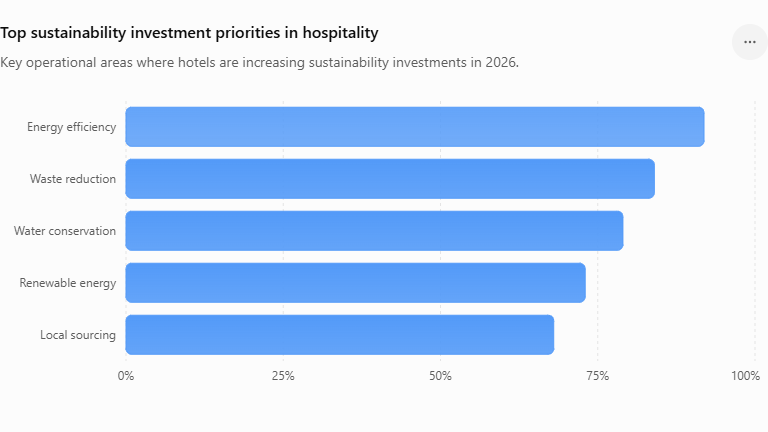
The chart represents relative industry priorities compiled from recent hospitality sustainability research and market reports.
From Sustainable to Regenerative Hospitality
One of the biggest shifts in 2026 is the move beyond sustainability toward regenerative hospitality. Rather than simply reducing environmental damage, hotels are investing in projects that actively restore ecosystems and strengthen local communities.
Examples include:
- Restoring wetlands and forests around resorts
- Supporting biodiversity projects
- Protecting marine ecosystems
- Funding local conservation initiatives
- Partnering with indigenous communities
- Promoting responsible tourism
This new approach allows hotels to leave destinations in better condition than they found them while creating meaningful experiences for guests. Industry outlooks identify regenerative hospitality as one of the defining trends shaping the future of travel.
Energy-Efficient Hotels
Energy remains one of the largest operational expenses for hotels.
Modern properties are investing in:
- Solar power systems
- Smart lighting
- Motion sensors
- AI-powered energy management
- High-efficiency HVAC systems
- Geothermal heating and cooling
Recent industry data shows that LED lighting upgrades reduce annual energy consumption by an average of 22%, while hotels using geothermal systems report 40–60% reductions in heating and cooling costs.
Water Conservation Takes Center Stage
Water scarcity is becoming an important challenge for destinations worldwide.
Hotels are introducing:
- Smart water meters
- Low-flow showers and faucets
- Rainwater harvesting
- Greywater recycling
- Smart irrigation systems
- AI-powered leak detection
These initiatives help reduce operating costs while preserving valuable natural resources.
Fighting Food Waste with Technology
Food waste continues to be one of hospitality’s largest sustainability challenges.
Hotels are now using AI to:
- Predict guest demand
- Optimize buffet preparation
- Monitor kitchen waste
- Improve inventory management
- Reduce over-ordering
Some luxury restaurants are also partnering with food redistribution organizations to donate surplus meals instead of sending them to landfills. AI-powered food waste monitoring has become an increasingly common sustainability initiative across the sector.
Local Sourcing and Farm-to-Table Experiences
Guests increasingly value authentic local experiences.
Hotels are strengthening partnerships with:
- Local farmers
- Fisheries
- Artisan producers
- Small food businesses
- Regional wineries
- Community cooperatives
Local sourcing reduces transportation emissions, supports regional economies, and provides fresher dining experiences.
Many luxury properties now promote seasonal menus featuring locally produced ingredients as part of their sustainability commitments.
Eco-Friendly Hotel Design
New hotels are being designed with sustainability from the ground up.
Popular features include:
- Green roofs
- Natural ventilation
- Recycled construction materials
- Solar glass
- Energy-efficient insulation
- EV charging stations
- Sustainable landscaping
Many developers are also pursuing certifications such as LEED, Green Key, and EarthCheck to demonstrate environmental performance. Green-certified hotels generally report lower energy use and stronger guest perceptions of sustainability.
Plastic-Free Hospitality
Single-use plastics continue to disappear from hotels.
Many properties have replaced:
- Plastic water bottles
- Disposable toiletries
- Plastic straws
- Single-use cutlery
- Plastic laundry bags
with reusable or biodegradable alternatives.
Refillable bathroom amenities and filtered water stations have become common features across premium hospitality brands.
ESG Reporting Becomes a Business Requirement
Environmental, Social, and Governance (ESG) reporting is moving from voluntary disclosure to a strategic necessity, particularly in regions with evolving sustainability regulations.
Hotels are now measuring:
- Carbon emissions
- Energy consumption
- Water usage
- Waste generation
- Supplier sustainability
- Employee well-being
- Diversity and inclusion
Transparent reporting helps investors, corporate clients, and travelers evaluate a property’s long-term sustainability performance. Recent research also highlights ESG’s role in improving trust, reputation, and business resilience.
Sustainable Guest Experiences
Modern travelers increasingly want to participate in sustainability efforts during their stay.
Hotels are encouraging guests through:
- Linen and towel reuse programs
- Carbon-neutral booking options
- Bicycle rentals
- Electric vehicle charging
- Nature restoration activities
- Community volunteering
- Eco-friendly excursions
Rather than reducing comfort, these initiatives enhance the overall travel experience by creating a stronger connection with the destination.
Technology Supports Sustainability
Artificial Intelligence and the Internet of Things (IoT) are making sustainability measurable and scalable.
Smart technologies now help hotels:
- Monitor electricity usage in real time
- Predict maintenance needs
- Optimize room temperatures
- Reduce water consumption
- Automate waste management
- Track carbon emissions
These digital tools improve operational efficiency while helping businesses meet ambitious environmental targets.
The Road Ahead
The hospitality industry in 2026 is embracing a future where sustainability is integrated into every aspect of operations—from architecture and procurement to guest services and technology. The next generation of successful hotels will not only reduce their environmental footprint but also contribute positively to the communities and ecosystems in which they operate.
As travelers become more conscious of their impact, sustainability is evolving from a competitive differentiator into a fundamental expectation. Hotels that combine environmental responsibility, operational innovation, and authentic guest experiences will be best positioned to thrive in the years ahead.