
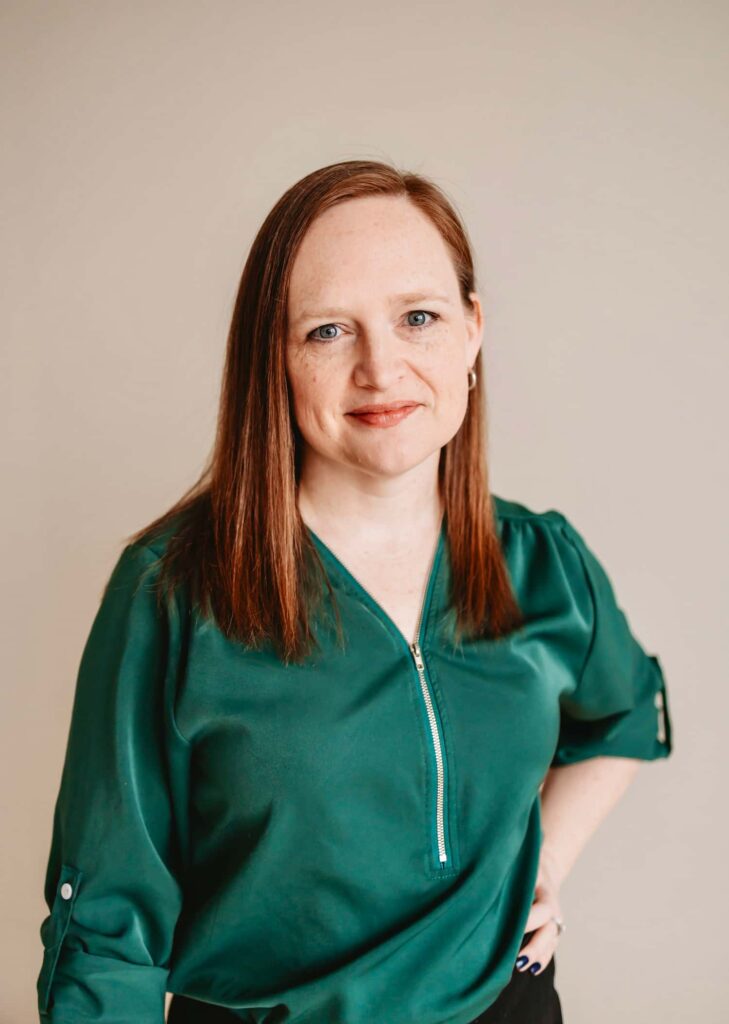
Dr. Cynthia Nebel serves as the Director of Learning Services and Associate Professor of Psychiatry and Behavioral Neuroscience at Saint Louis University School of Medicine. Her professional journey reflects a deep commitment to improving how people learn and how educators teach. Before stepping into her current leadership role, she spent more than a decade in higher education teaching cognitive psychology, statistics, and the science of learning. Her academic work focused on understanding how memory works, how expertise develops, and how evidence can guide better instructional decisions. Over time, her career evolved from traditional classroom teaching to broader leadership in learning design and faculty development. We at CIO Global, are proud to introduce Dr. Cynthia Nebel as one of the Visionary Women Shaping the Future of Education, 2026.
One of the accomplishments she values most is her volunteer work with The Learning Scientists, a group of four female cognitive psychologists devoted to sharing research on the science of learning with educators and students. What began ten years ago as a simple blog has grown into a global platform. Today, The Learning Scientists provide podcasts, videos, workshops, and downloadable resources that translate cognitive science research into practical strategies for educators and students around the world. Through this work, Cynthia has helped bridge the gap between research and practice, ensuring that complex scientific findings are accessible and usable in real classrooms.
Real impact in education happens when research and practice move forward together.
Her decision to work in education was rooted in a belief that education shapes the future. She understands that the long-term impact of her work may not always be visible, yet she trusts that its influence continues to ripple outward. This perspective keeps her motivated each day. For Cynthia, working in education is an investment in generations she may never meet, but whose lives will be shaped by stronger learning systems and better instructional practices.
As a leader, she describes her style as collaborative and compassionate. She works alongside the people she leads to define objectives, build skills, and move toward shared goals. Rather than imposing direction, she partners with colleagues to create solutions that align with both institutional priorities and individual circumstances. Her leadership reflects empathy balanced with accountability, and vision grounded in practicality.
Throughout her career, Cynthia has faced resistance to evidence-based practices. Education is filled with persistent learning myths, and many educators have invested significant time in intuitive methods. Challenging those beliefs requires patience and trust. She approaches these situations with clear communication and respect, meeting educators where they are rather than dismissing their experiences. She understands that change is rarely achieved through data alone. It requires dialogue, shared purpose, and careful relationship building.
She believes that one of the greatest needs in today’s education system is sustained commitment. In many school districts across the United States, new initiatives are introduced each year. This pattern can create fatigue and skepticism, with educators viewing new practices as temporary trends. Cynthia argues that meaningful improvement requires long-term administrative support and consistency. Without stability, even the most promising innovations struggle to take root.
Technology and innovation are also central to her work, particularly in the area of artificial intelligence. She consults with educational technology companies and leads workshops to ensure that AI tools enhance, rather than replace, sound instructional strategies. She sees AI as a powerful amplifier of effective practices when it is aligned with cognitive science. However, she cautions against adopting technology simply because it is new. Tools must serve learning, not distract from it.
Evidence-based practice is not a trend – it is a commitment to doing what truly works.
For Cynthia, future-ready education is not about predicting specific technologies or chasing trends. It is about preparing learners to think effectively in uncertain conditions. By grounding education in cognitive science, educators can design learning environments that build durable understanding. Knowledge, in her view, is the foundation of critical thinking and problem-solving. Without strong knowledge structures, higher-order skills cannot fully develop.
She supports growth among students and educators by promoting clarity and psychological safety. Students benefit from high standards, transparent expectations, and meaningful feedback. Support does not mean lowering expectations. Instead, it means providing structures that help learners reach rigorous goals. For educators, professional growth often begins by connecting research to daily practice. Cynthia creates spaces for discussion, reflection, and shared learning, recognizing that professional change is both intellectual and emotional.
Cynthia believes women leaders play a critical role in shaping the future of education. Diverse leadership strengthens problem-solving by bringing varied perspectives to complex challenges. Many women leaders demonstrate an ability to balance accountability with empathy and strategic thinking with relational trust. Representation also matters. When young professionals see diverse leaders, they are more likely to imagine themselves stepping into leadership roles.
Resilience, for Cynthia, comes from meaning and perspective. She distinguishes between urgency and importance, focusing her energy on work that has lasting impact. While some seasons demand intense effort, she prioritizes rest and self-care to maintain balance. This intentional approach helps her manage competing responsibilities without losing clarity of purpose.
Looking ahead, she hopes to expand evidence-based practices in medical education while strengthening connections between research and K-12 classrooms. With new national leadership roles, she aims to influence systemic change and promote sustainable improvement across educational contexts.
Her message to readers is clear. Leadership in education is a responsibility. Every decision affects real learners. True impact requires examining assumptions, measuring outcomes, and adjusting when necessary. Innovation can support progress, but only when grounded in evidence and guided by integrity.
Leadership in education is not about authority, but about responsibility for every learner we serve.